
When we think of the perfect bowl of noodles, we think of that specific “al dente” snap, the smooth surface that holds onto sauce, and the ability of the noodle to stay firm in a steaming broth. Achieving this isn’t just about flour and water; it’s a feat of food science.
At Purix, we focus on the functional ingredients that make textures possible. In the world of pasta and noodle manufacturing, Guar Gum is the essential stabilizer that separates a soggy, breaking noodle from a professional-grade product.
Here is the science behind why Guar Gum is a non-negotiable ingredient in modern noodle production.
1. Superior Viscosity & Dough Handling
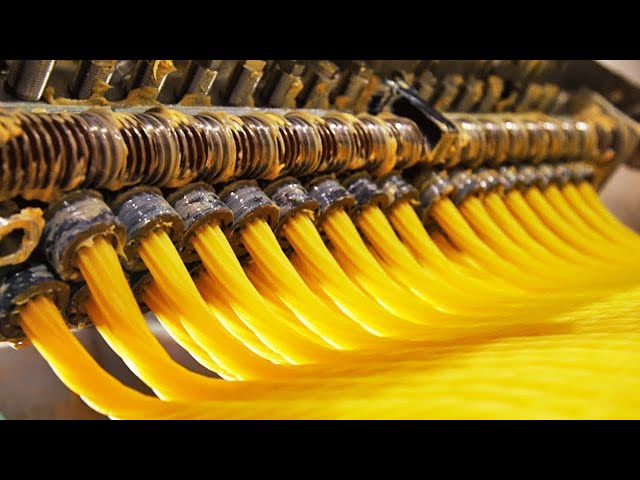
Noodle dough needs to be incredibly elastic yet strong enough to be pulled, extruded, or cut into thin strands. Guar gum is a high-galactomannan polysaccharide. When added to flour, it increases the viscosity of the dough.
- The Benefit: It acts as a secondary binder to gluten. For manufacturers, this means the dough is more “machineable”—it won’t stick to rollers or break during the high-speed stretching process.
2. Moisture Retention (The Anti-Soggy Factor)
One of the biggest challenges in noodle science is water activity. If noodles lose moisture too fast, they become brittle and crack. If they absorb too much water while cooking, they become mushy.
Guar gum is hydrophilic (water-loving). It locks moisture into the starch network of the noodle.
- During Storage: It prevents the noodles from drying out and breaking in the package.
- During Cooking: It regulates water uptake, ensuring the noodle swells to the perfect size without losing its structural integrity.
3. Enhanced Mouthfeel and “The Snap”
The “eating quality” of a noodle is measured by its tensile strength and elasticity. Pure wheat noodles can sometimes become limp. Purix Guar Gum reinforces the protein-starch matrix.
This creates a “slippery” smooth surface that feels high-quality on the palate and provides that satisfying “rebound” or snap when you bite into it.
4. Oil Reduction in Instant Noodles
In the production of instant (fried) noodles, the strands are flash-fried to create tiny pores for quick rehydration later. Without a stabilizer, these pores can soak up too much oil, making the noodles greasy and high in fat.
Guar gum creates a thin, invisible barrier on the surface of the noodle. This barrier resists oil absorption during the frying process, resulting in a lighter, healthier, and less greasy final product.
The Purix Advantage
Not all guar gum is created equal. The “Science of Purix” ensures a high-purity, fine-mesh powder that hydrates instantly without clumping. This consistency is vital for large-scale production where even a small deviation in dough thickness can lead to thousands of rejected units.
Summary: The Functional Roles
| Feature | Scientific Impact | Consumer Result |
| Binding Power | Strengthens gluten-starch matrix | Noodles don’t break in the pot |
| Water Regulation | Controls hydration speed | Perfect “Al Dente” texture |
| Surface Film | Reduces lipid (oil) uptake | Healthier, less greasy noodles |
| Freeze-Thaw Stability | Prevents starch retrogradation | Better quality in frozen ramen/pasta |
- From instant ramen to gourmet pasta, Purix Guar Gum provides the structural “skeleton” that allows the flavors of your recipe to shine. It’s not just an additive; it’s the science of a better noodle.
What is the % of Guar Gum in noodles?
In the commercial production of noodles, guar gum PURIX FG 743 GG is used in very precise, small quantities. Because it is highly efficient, even a fraction of a percent can significantly change the dough’s behavior.
For most noodle applications, the usage rate falls between 0.1% and 0.5% of the total flour weight.
Breakdown by Noodle Type
The specific percentage usually depends on the final format of the noodle:
- Standard Dried Noodles:0.2% to 0.3%
- This is the “sweet spot” for improving tensile strength and preventing breakage during packaging.
- Instant Noodles (Fried):0.3% to 0.5%
- A slightly higher percentage is used here to create a barrier that reduces oil absorption during the frying process and helps the noodles rehydrate faster in hot water.
- Fresh or Wet Noodles:0.1% to 0.2%
- Used primarily to maintain a smooth surface and prevent the strands from sticking together before they are cooked.
- Gluten-Free Noodles:1.0% to 2.0%
- In the absence of wheat gluten, guar gum must act as the primary structural binder. Consequently, the percentage drops significantly higher to mimic the “chew” of traditional pasta.
How to Calculate the Percentage
In professional food science, this is calculated based on Flour Weight (Baker’s Percentage), not the total weight of the dough.
Example Calculation: If you are using 100kg of flour:
- At 0.2%, you would add 200 grams of Guar Gum.
- At 0.5%, you would add 500 grams of Guar Gum.
Why not use more?
It is tempting to think more gum equals stronger noodles, but there is a “tipping point.” If you exceed 0.5% in standard wheat noodles:
- Gummy Texture: The noodles can become unpleasantly slimy or “rubbery” on the surface.
- Dough Handling: The dough becomes too elastic and “snaps back” too much, making it difficult to roll into thin sheets.
- Flavor Masking: High concentrations can coat the palate and dull the natural flavor of the grain.
If you are using Purix or another high-viscosity guar gum, always start at the lower end (0.2%) and increase only if the noodles are still too brittle.